
OptAxe Live with First FX Options Trade
Posted by Colin Lambert. Last updated: January 27, 2026
The evolution of electronic FX options trading has not followed a steady path, but signs have emerged over the past year or so, that interest – and importantly demand – is building. Some have suggested that the relatively limited growth in e-ratios is because the trading models available simply don’t suit market makers, who are typically more important in FX options than, for example, spot markets.
The market now has a different execution model live, however, following news that FX options platform OptAxe has executed the first trade on its MTF, between two unnamed “tier one names”, whereby an axe was published to the venue, generating an RFQ, which in turn led to the trade.
Rather than be described as a multi-dealer venue, OptAxe is probably more accurately a multi-issuer venue, given the model which allows dealers to list axes they have in the FX options market to targeted participants. This provides, Chris Jackson, co-founder and CEO of the firm, says, “Information security for dealers providing axes, they have control over who sees the interest.
“One of our key USPs is the control we are giving back to the risk taker. Today it’s very difficult for a dealer to manage how an axe is distributed – and whether it reaches the right counterparties or the wrong ones!” he adds. “We want dealers to control the information flow around an axe, which should make them more comfortable expressing interest – particularly in less liquid pairs, tenors, or structures.”
A first trade is always a big moment for a platform, not least because it provides proof of concept and that the technology and processes put in place, actually work. This is highlighted by Yorke O’Leary, COO and co-founder of OptAxe, who, while noting that “everything worked as planned – including the work required post-trade” says that OptAxe has received additional commitments from market participants to join the venue. “ We have a strong onboarding pipeline and we also know some firms want to see live operation before committing resources. We have now reached that point, which is very encouraging,” he says.
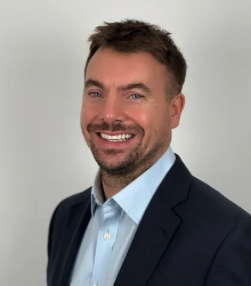
“Dealers know that best execution, especially in option markets, involves balancing price and market impact of their flow, especially in non-generic pairs, products and tenors”
OptAxe received FCA authorisation to operate the MTF at the end of 2024, meaning the workflow aspect is all-important, given the compliance obligations for market participants. Jackson says that the post-trade workflow – “the important stuff, where a lot of the work is focused” – went as planned. “It’s important that traders don’t have to deviate from their normal workflows,” he stresses. “Confirmations were matched, messaging efficient, and the MTF recorded the trade, so the STP worked well.”
Looking ahead, as O’Leary and Jackson both acknowledge, “the hard work really starts” as OptAxe looks to build on this first success. Both are confident, however, that they have an edge in the model. “Our RFQs are a little different,” observes Jackson. “On other platforms makers receive a large number of RFQs every hour – many for little result, but when they get a request from OptAxe it is on a piece of risk they really care about. This differentiates us, because it is about the quality of RFQ, not the quantity.”
It will not just be a one-way street, however, for O’Leary explains that buy side firms can also post their own axes or interest in receiving axes from dealers with whom they have a credit relationship, as can agencies. “Agencies do a good job in FX options, and they will continue to play a role” he observes. “If the dealer wants to show agencies liquidity they can do so on our platform”
Agency trading aside, a key element of OptAxe’s modus operandi is support of the relationship, which could be critical given the trend in spot markets over the last few years towards trading via that model. “We are looking to promote two-way communication, so for a buy side firm, for example, rather than show their interest around the market with multiple RFQs, on OptAxe they can get three prices from makers that actually have an interest and are keen to deal,” explains O’Leary. “This immediately reduces signalling and produces pricing that should be beneficial to both sides.”

“We have a strong onboarding pipeline and we also know some firms want to see live operation before committing resources. We have now reached that point”
Jackson adds, “Our philosophy has always been to enhance bilateral relationships. We are not seeking to disintermediate. Bilateral relationships, especially when banks are focused on containing balance sheet usage, are increasingly important.”
For now, though, OptAxe has passed an important threshold in its development, but as Jackson notes, “We know we must keep working very hard to prove that we can provide the market with something it actually wants. Volumes and participant numbers are healthy in FX, but there are no guarantees, so we need to build on our early momentum and expand the network and provide a positive experience.
“A big part of that is putting something slightly different out there,” he continues. “Dealers know that best execution, especially in option markets, involves balancing price and market impact of their flow, especially in non-generic pairs, products and tenors. We are really focused on that – taking the signalling out of the equation, while at the same time giving customers targeted liquidity.”
Time will tell whether this different model works in FX options, but an important milestone has been passed for OptAxe, and it can now push its differentiator with the confidence of live trades on the venue. As O’Leary observes, “The OTC process hasn’t changed that much for OTC options over the past 20 years, so if we can move that conversation forward a little bit then we are benefiting the market and participants.”